Transitioning to clean energy is one of the most significant financial decisions a property owner or industrial manager can make. The volatile nature of traditional grid tariffs makes energy independence highly appealing. However, executing a highly efficient energy transition requires looking beyond superficial marketing materials. Selecting an inexperienced installation firm often results in structural failures, underperforming yields, and extensive legal bottlenecks. True solar engineering requires a comprehensive understanding of electrical load distributions, structural mechanics, and grid synchronization protocols.
Property owners frequently face unexpected mechanical degradation and systemic underperformance because of poor initial system architecture. Substandard installations often suffer from galvanic corrosion, poor waterproofing, and faulty electrical stringing that can lead to micro cracks and hot spots within months of operation. These technical flaws do not just reduce immediate efficiency; they cause compounding financial losses through unplanned downtime and rapid equipment degradation. Mitigating these risks demands an alignment with engineering groups that possess deep technical insights, rigorous field experience, and strict adherence to international safety standards.
Navigating the local energy market introduces regional challenges, including high ambient temperatures and severe particulate dust accumulation across Punjab. Distinguishing true engineering capability from standard commodity trading requires a meticulous evaluation of available field experts. Homeowners and industrial facility managers must systematically vet the capabilities of various solar panel dealers in Lahore to ensure their chosen partner can execute high level electrical mapping, handle intricate net metering applications, and provide robust post installation diagnostic support.
Selecting Strong Panel Racks for Heavy Wind Protection
Rooftop installations are constantly exposed to extreme environmental stresses, especially during intense monsoon seasons. The mounting framework must withstand high wind velocities without displacing the modules or damaging the underlying roof structure. High quality engineering relies on custom extruded aluminum or heavy duty hot dip galvanized iron structures that are certified to survive wind speeds between 130 and 150 kilometers per hour. Substandard mountings often experience mechanical bending or failure, which voids product warranties and threatens the structural integrity of the property.
High grade structural layouts utilize specialized chemical anchors and robust Strut Post Bases to ensure a completely waterproof and structurally sound link to the roof slab. Properly tightened Mid Clamps and End Clamps distribute the mechanical stress uniformly across the module frame. This careful distribution prevents localized twisting that could cause glass fractures or internal cell micro cracks during high wind events. The entire system relies on every component working together to maintain long term alignment and safety.
Inverter Matching and String Architecture Optimization
Inverters serve as the core intelligence of any photovoltaic installation, converting direct current into usable alternating current. A critical factor in system design is the precise optimization of string architecture and Maximum Power Point Tracking (MPPT) channel allocations. Inexperienced installers often commit string sizing errors by ignoring the temperature coefficient of open circuit voltage. During cold winter mornings, the voltage of a solar array increases significantly. If the string voltage exceeds the maximum DC input capacity of the inverter, it can cause catastrophic component burnout.
Conversely, poor string designs with inadequate voltages fail to kickstart the inverter during low light hours, reducing daily energy generation by up to 15 percent. Shading analysis using advanced software tools ensures that localized obstructions do not activate bypass diodes unnecessarily. This protective step prevents localized heat accumulation and preserves optimal yield profiles across the entire system. Proper configuration balances these voltage limits to ensure early startup and safe operation throughout the year.
Managing Grid Interconnection and Net Metering Bottlenecks
A common point of frustration for solar adopters is the prolonged delay in activating net metering benefits. Securing approvals from regional utility networks require flawless documentation and technical compliance. The process involves comprehensive three phase load balancing, rigorous insulation resistance tests, and meticulous grounding checks. True solar engineering experts handle the complete regulatory workflow smoothly.
Expert execution ensures that the installed bi directional green meter accurately records excess energy exported back to the grid. Failing to balance phases properly across the system can cause utility rejections or protective tripping. This technical error delays the return on investment by several months and leaves the client bearing high grid tariffs unnecessarily. Professional management eliminates these regulatory hurdles by ensuring compliance before inspections occur.
Assessing Total Cost of Ownership Versus Initial Capital Expense
Prioritizing lower upfront capital expenditure often results in vastly higher lifetime costs due to rapid component degradation and continuous maintenance requirements. High quality systems utilize Tier 1 N type TOPCon modules that feature incredibly low annual degradation rates, typically around 0.4 percent over a 25 year operational lifespan. In contrast, lower tier or B-grade modules can degrade at a rate of 1.5 to 3 percent annually, rapidly diminishing the financial yield of the asset.
When evaluated over two decades, a system built with premium components delivers up to 30 percent higher cumulative energy generation compared to a cut rate installation. The financial modeling must always account for inverter lifespans, operations and maintenance schedules, and the structural durability of the mounting hardware. Analyzing these factors reveals the authentic total cost of ownership, proving that cheap components represent a long term liability.
Analyzing Linear Degradation Curves and Cell Tech Varieties
The evolution of photovoltaic cell architectures requires careful analysis when selecting equipment. The industry transition from older P-type PERC cells to advanced N-type Tunnel Oxide Passivated Contact (TOPCon) technology offers profound operational advantages. N-type cells exhibit zero Light Induced Degradation (LID) and possess a superior temperature coefficient, typically around 0.30 percent per degree Celsius. As ambient temperatures rise during peak summer months, N-type modules lose significantly less efficiency compared to older alternatives.
Understanding these specific linear performance guarantees ensures that the system continues to produce high power yields even under harsh environmental conditions. The lower degradation rate directly translates into predictable energy generation profiles over decades. Choosing advanced cell technology secures the financial viability of the infrastructure against premature aging.
Implementing Thermal Imaging and Advanced Diagnostic Protocols
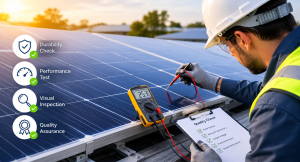
Long term system stability relies heavily on proactive operations and maintenance programs. Elite solar engineering teams employ advanced diagnostic tools, including infrared thermography and string level monitoring applications, to detect hidden issues before they cause system downtime. Thermal imaging cameras can instantly pinpoint localized hot spots caused by internal micro cracks, loose electrical connections, or faulty bypass diodes.
Identifying these electrical anomalies early prevents localized thermal runaway conditions that could otherwise destroy an entire module or present severe fire hazards. Continuous cloud based performance monitoring allows engineers to analyze real time current voltage curves. This transparent data management ensures any drop in production is identified and resolved within hours rather than weeks.
Premium Solar Engineering Tailored for Sustainable Energy Infrastructure
Operating from a specialized engineering hub located in Etihad Town along Raiwind Road, a highly dedicated team delivers top tier solar solutions across industrial, commercial, and residential sectors. The firm specializes in the deployment of ultra high efficiency Tier 1 photovoltaic modules from globally recognized manufacturers. These premium modules are carefully paired with state of the art industrial string inverters from leading brands ensuring optimal power conversion efficiency and long term system stability.
The engineering group manages every aspect of the project lifecycle, from rigorous structural wind load simulations to complex three phase net metering integrations with regional electrical networks. With a distinct focus on mitigating energy instability, the firm designs advanced battery storage configurations using highly reliable components from Inverex, Knox, and GoodWe to guarantee seamless backup power during grid disruptions. Every installation features heavy duty customized structural framing and rigorous electrical diagnostics, ensuring that clients secure unmatched energy yield metrics, reduced operating expenses, and an accelerated return on investment.
Frequently Asked Questions
What is the practical difference between N-type TOPCon and P-type PERC solar panels?
N-type TOPCon panels feature advanced cell architecture with zero Light Induced Degradation (LID) and lower temperature coefficients compared to P-type PERC panels. This allows N-type modules to deliver higher power yields over time, degrading at approximately 0.4 percent annually compared to the 0.7 percent rate typical of older P-type alternatives.
How does ambient temperature affect the overall power output of a solar array?
Solar panels are tested at a standard temperature of 25 degrees Celsius. As ambient temperatures rise, the operational temperature of the cells increases, causing a drop in voltage and an overall decrease in power output. Premium panels mitigate this through lower temperature coefficients, preserving efficiency during hot summer periods.
Why is custom string architecture design critical for preventing inverter burnout?
Each inverter has precise DC input voltage ranges. String architecture design calculates the maximum open circuit voltage based on the lowest local historical temperatures. If the string contains too many panels, winter voltage spikes can surpass the inverter limits, causing catastrophic hardware failure.
What structural wind load capacity is required for rooftop installations?
Rooftop solar installations must be engineered to withstand localized wind speeds, which regularly reach 130 to 150 kilometers per hour during extreme weather events. The mounting structures, anchors, and clamps must be certified by structural engineers to prevent mechanical displacement.
How does phase balancing during installation impact net metering approvals?
Three phase net metering systems require the solar generation to be distributed evenly across all three electrical phases. Unbalanced phases can trigger safety faults, cause utility inspection failures, and lead to regulatory rejection from regional grid operators.
What causes Potential Induced Degradation (PID) in solar modules, and how is it prevented?
PID occurs due to high voltage differences between the solar cells and the grounded mounting structure, leading to harmful stray currents that degrade panel performance. High quality experts use PID resistant module materials and select inverters with built in PID recovery functions to prevent this issue.
What are the operational differences between a hybrid inverter and a grid tied inverter?
A grid tied inverter operates exclusively in synchronization with the utility grid and shuts down during power outages for safety. A hybrid inverter manages both the solar array and a battery storage bank, allowing the system to switch to backup mode and supply electricity during grid failure.
How frequently should infrared thermal imaging be performed on a solar array?
Thermal imaging inspections should be conducted at least once every twelve months for residential systems and bi-annually for industrial arrays. This preventative maintenance quickly identifies internal micro cracks, hot spots, and faulty diodes before they cause systemic damage or fire risks.
What role do bypass diodes play when a portion of the solar array faces shade?
Bypass diodes allow electrical current to flow around shaded or damaged sections of a solar panel string. This design feature prevents the shaded cells from acting as electrical resistors, which would drastically drop the current output of the entire string and cause dangerous overheating.
How does dust accumulation affect long term energy yield metrics?
Particulate dust accumulation, known as soiling, blocks sunlight from reaching the photovoltaic cells, reducing system efficiency by 10 to 30 percent if left unmanaged. Regular automated cleaning schedules and optimized panel tilt angles help minimize these performance losses over time.
Wrapping Up
Selecting the right engineering partner is the foundational step toward achieving lasting energy independence and long term financial stability. A system designed with rigorous technical precision guarantees reliable energy output while shielding property owners from volatile grid utility tariffs. By prioritizing certified structural designs, optimized string layouts, and premium components, investors ensure their asset remains safe and productive throughout its intended multi decade operational lifespan.
The long term performance and durability of modern photovoltaic systems depend entirely on the initial engineering integrity and continuous maintenance protocols established during execution. Moving past superficial marketing metrics allows stakeholders to make well informed decisions that protect their capital investments from premature mechanical failure or rapid degradation. Aligning with an experienced team ensures that regulatory approvals, engineering validations, and hardware choices are managed smoothly.
A high performing solar power asset serves as a pillar of corporate sustainability and household financial security. Investing in top tier craftsmanship and advanced cell technologies yields measurable dividends through reduced operating expenses and substantial carbon footprint reductions. By focusing closely on clear technical benchmarks and reliable execution strategies, property owners successfully transform their energy architecture into a highly predictable source of clean power.