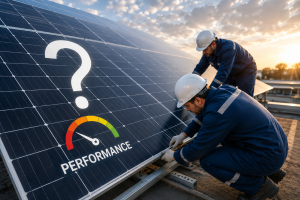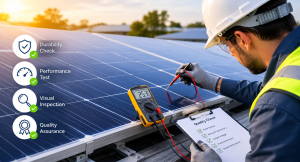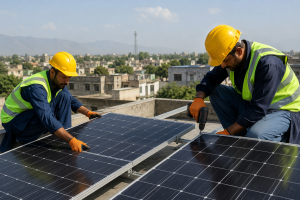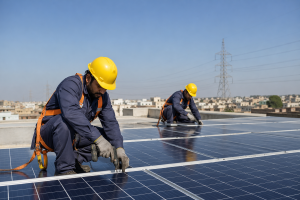
Grid dependency creates a massive financial liability for homeowners facing escalating electricity tariffs and unpredictable load shedding schedules. Property owners often rush to procure photovoltaic setups to offset these costs, only to discover that their expected return on investment falls drastically short due to execution flaws. The true cost of an unoptimized setup is not just the initial capital. It manifests as severe mechanical degradation, chronic underperformance, and expensive unplanned downtime over a twenty-year lifecycle. Precision engineering dictates the difference between a high-yield power asset and a rooftop liability. An incorrectly calibrated array suffers from excessive inverter clipping, high voltage drops, and thermal stress, which directly reduces the kilowatt-hour output.
Rather than viewing setup as a simple plug-and-play operation, residential deployments demand stringent adherence to electrical codes, precise load profiling, and strategic hardware matching using Tier-1 components. Investing in a solar system in Lahore requires navigating specific climatic challenges, from intense summer heat that degrades panel efficiency to structural considerations for local roof types. Relying on specialized providers ensures that variables like azimuth angles, DC-to-AC ratios, and advanced battery discharge thresholds are calculated meticulously. This strict attention to technical tolerances guarantees continuous energy generation and accelerates the payback period.
Analyzing Rooftop Azimuth and Shading Dynamics
The physical orientation of photovoltaic modules directly dictates their exposure to solar irradiance. Installers frequently prioritize aesthetic symmetry on a roof rather than calculating the optimal azimuth angle. Panels facing suboptimal directions suffer severe losses in peak sun hours. Minor shading from nearby architecture or foliage also triggers disproportionate power losses across an entire string. Because most standard panels are wired in series, shading on a single cell restricts the current flow for the entire array.
Real-world complications arise when localized shading triggers bypass diodes, which permanently degrades panel internal components through localized thermal hotspots. Over time, these hotspots cause permanent micro-cracking and void manufacturer warranties on premium brands. Proper irradiance mapping ensures the highest possible photovoltaic yield. Correct angling and strategic stringing adjustments easily secure a fifteen to twenty percent increase in overall energy production over an improperly aligned setup. This efficiency gain immediately shortens the return on investment timeline and maximizes daily kilowatt-hour generation.
Mismatched Inverter Capabilities and String Limits
An inverter serves as the critical brain of any power setup, converting direct current into usable alternating current. A frequent oversight involves mismatching the DC input capacity of the solar array with the maximum parameters of the inverter. If an array generates a voltage that exceeds the inverter’s Maximum Power Point Tracking limits, the system actively throttles production. This phenomenon, known as inverter clipping, wastes valuable generated power during peak daylight hours.
Conversely, under-sizing an array for a high-capacity inverter forces the unit to operate inefficiently, failing to reach the minimum startup voltage required to begin inversion early in the morning. When hardware from reputable brands are incorrectly specified, the lifespan of the internal capacitors drops due to constant thermal stress and voltage irregularities.
Matching the DC-to-AC ratio accurately yields substantial reliability benefits. A properly sized inverter operates within its optimal thermal envelope, reducing mechanical wear and preventing unnecessary power throttling. Property owners experience a steady, unclipped energy curve throughout the day, ensuring maximum grid offset and lower operational temperatures for the hardware.
Substandard Wiring and Inadequate Breaker Integration
Electrical infrastructure forms the physical arteries of a residential power plant. A massive operational error occurs when undersized AC/DC cables are deployed to save upfront costs. Undersized cables possess higher resistance, which induces severe voltage drops between the roof array and the inverter, and again between the inverter and the main distribution board. The energy lost in this transmission is converted into heat. This heat breaks down cable insulation and creates severe fire hazards. Furthermore, pairing substandard wiring with mismatched AC/DC breakers leads to nuisance tripping or, worse, failure to trip during a genuine short circuit.
Real-world complications manifest as melted terminal blocks and destroyed charge controllers. Unplanned downtime caused by electrical faults severely damages the financial viability of the system. Utilizing specialized AC/DC cables and appropriately rated breakers completely neutralizes these transmission losses. Upgrading to heavy-gauge copper wiring ensures voltage drops remain well below the standard two percent threshold. This precise electrical engineering delivers a highly quantifiable benefit by retaining maximum power output and completely eliminating the cost of emergency electrical replacements.
Poor Structural Mounting and Roof Penetration
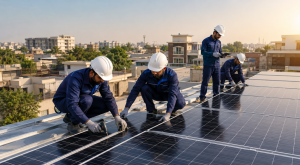
High-tier panels are engineered to withstand significant wind loads, but their durability relies entirely on the structural integrity of their mounting racks. A critical structural error involves applying incorrect torque to panel clamps or utilizing incompatible roofing rails. When galvanized frames are bolted directly into rooftops without proper weatherproofing, the penetration points become immediate liabilities for water leakage and structural rot.
Wind uplift creates dynamic stress on the entire array. If the rail spacing does not match the manufacturer’s specific clamping zones, the aluminum frames of the panels flex under heavy wind. This flexing creates microscopic fractures within the silicon cells. These micro-cracks severely throttle electron flow and create dead zones across the panel surface, permanently ruining the hardware’s output capacity.
Deploying wind-rated, non-corrosive mounting hardware secures the physical investment. Precision clamping ensures zero flex during severe weather events, preventing internal silicon damage. Property owners benefit from a stable, leak-proof installation that guarantees the twenty-five-year mechanical lifespan of the panels without requiring mid-lifecycle roof repairs.
Miscalculating Battery Depth of Discharge Profiling
Energy storage provides the crucial buffer against load shedding. However, miscalculating the residential load profile leads directly to battery abuse. A common failure point is drawing higher continuous currents than the battery bank is rated to supply, or allowing lithium or tubular batteries to drain past their safe depth of discharge limits.
When a battery is consistently drained below its recommended threshold, the internal chemistry degrades exponentially. A storage unit rated for six thousand cycles can be destroyed in less than a thousand cycles if forced to endure daily deep discharges caused by uncalculated heavy loads like air conditioners or water pumps. The financial impact of replacing a ruined solar battery bank far outweighs the initial savings of undersizing the storage capacity.
Integrating properly sized solar batteries with strict discharge parameters governed by the inverter guarantees uninterrupted power. A meticulously calculated load profile ensures the storage system never drops into damaging low-voltage states. This extends the lifespan of the battery bank to its maximum engineered limit, providing a predictable, low-maintenance energy reserve that completely neutralizes grid outages.
Ensuring Precision Execution
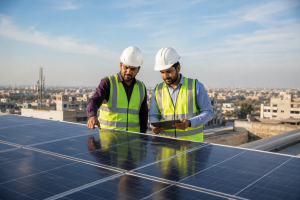
Achieving absolute energy independence requires treating the installation as a highly technical engineering project. Procurement of high-quality components is only the first step. The true value is unlocked through rigorous site auditing, precise electrical calculations, and flawless structural execution. By integrating Tier-1 solar panels, intelligent inverters, robust AC/DC breakers, and optimized battery storage, property owners secure a highly resilient power source.
Eliminating mechanical degradation and preventing electrical bottlenecks ensures the setup delivers decades of high-yield performance. Trusting specialized providers to execute these technical mandates guarantees that every kilowatt generated directly impacts the bottom line, turning an engineered array into the most reliable asset on the property.
FAQ’s
What causes panels to produce less power than their rated capacity?
Power output drops due to environmental factors like heavy dust accumulation, improper azimuth angles, localized shading, and high ambient temperatures. Additionally, voltage drops through undersized AC/DC cables restrict the final power delivered to your main board.
Why does my inverter shut down during peak sunlight?
This is often caused by over-voltage or severe thermal throttling. If the string configuration delivers a voltage exceeding the inverter’s limits, the system will shut down to protect its internal components. Proper string sizing prevents this dangerous hardware stress.
How does improper clamping physically damage photovoltaic modules?
Applying pressure outside of the manufacturer’s designated clamping zones causes the aluminum frame to flex under wind loads. This invisible flexing snaps the fragile silicon cells inside, creating permanent micro-cracks that ruin the panel’s ability to generate electricity.
What is inverter clipping and how does it impact yield?
Clipping occurs when the direct current generated by the panels exceeds the maximum alternating current output capacity of the inverter. The inverter actively ignores the excess energy, resulting in wasted generation potential during the brightest parts of the day.
Why are specialized AC/DC breakers necessary for residential setups?
Standard household breakers are not designed to handle the specific load profiles and rapid voltage fluctuations of photovoltaic arrays. Specialized direct current breakers safely isolate the panels during maintenance and protect the inverter from catastrophic short circuits.
How do localized hotspots form on a panel?
When a small section of a panel is shaded, that specific area stops producing power and instead begins consuming power from the rest of the unshaded string. This reverses the current, generating extreme heat that permanently burns the internal cells and bypass diodes.
What is the financial impact of undersized solar cables?
Undersized cables create electrical resistance, which burns off generated power as heat before it ever reaches your home. This continuous energy loss extends your return on investment timeline and creates an immediate fire hazard within the conduit.
How do you prevent battery degradation during load shedding?
Battery degradation is prevented by accurately calculating your critical home loads and programming the inverter to stop drawing power once the battery reaches its safe depth of discharge limit. Overdrawing capacity chemically destroys the battery cells.
Why is structural wind load calculation critical for roof setups?
Solar arrays act like sails during heavy storms. Without precise wind load calculations and appropriate mounting torques, dynamic wind pressure can rip the racking system from the roof, causing catastrophic damage to both the hardware and the property.
How does precise inverter matching extend system longevity?
Matching the array size to an intelligent unit like SunGrow or GoodWe ensures the hardware operates within its intended thermal and electrical thresholds. This reduces heat degradation on internal capacitors, ensuring the system operates flawlessly for over a decade without replacement.
Closing Thoughts
Transitioning to renewable energy is a major capital expense that quickly turns into a financial liability if foundational engineering principles are ignored. As outlined, taking shortcuts with cable sizing, ignoring strict battery depth-of-discharge limits, or accepting haphazard structural mounting does more than just lower your daily kilowatt-hour yield. These errors physically degrade the hardware. The financial burden of replacing burnt bypass diodes, replacing damaged lithium cells, or repairing roof leaks far exceeds any upfront savings gained from a substandard installation.
A high-performance array requires absolute technical precision from day one. By prioritizing accurate site irradiance mapping, strictly matching inverter DC-to-AC ratios, and deploying heavy-gauge electrical infrastructure, property owners eliminate the risk of unplanned downtime. Professional execution means the setup is mathematically modeled to handle local load-shedding schedules and extreme temperature variables without throttling output or stressing internal components.
The ultimate benefit of avoiding these critical installation errors is a predictable, highly resilient power asset. When structural integrity and electrical tolerances are strictly maintained, the system operates at peak efficiency. This guarantees maximum daily energy harvest, a significantly accelerated payback period, and permanent protection against escalating grid tariffs for the entire twenty-five-year lifespan of the hardware.